The automobile is one of the most important inventions in human history. It reshaped transportation, connected cities, and made personal mobility possible for everyone. But the question remains: Who invented the first car? And how did it evolve into the modern machines we drive today?
Let’s take a journey back to the very beginning of the automotive era.
The World Before Cars
Before automobiles existed, people relied on:
- Horse-drawn carriages
- Steam-powered wagons
- Early mechanical transport experiments
Travel was slow, unpredictable, and highly limited.
By the mid-1800s, inventors around the world began dreaming of a self-moving vehicle — a machine that could run without horses.
Karl Benz, The Father of the Modern Car (1885)
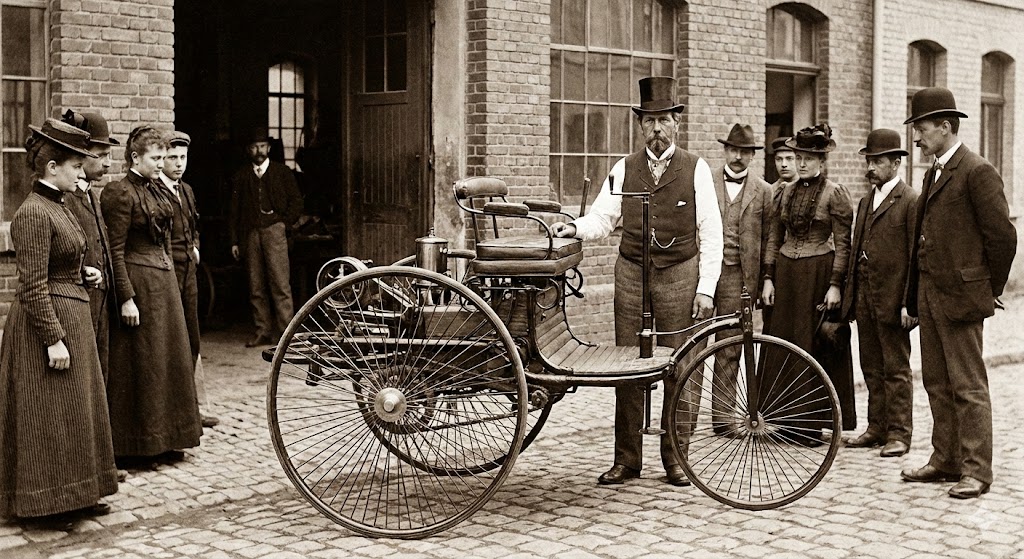
The credit for the first true automobile goes to Karl Benz, a German mechanical engineer.
✔ In 1885, he built the world’s first practical gasoline-powered car:
The Benz Patent-Motorwagen
What made it a “real car”?
Unlike previous experiments, it had:
- A combustion engine
- Three wheels
- A working steering system
- A fuel tank
- A functional braking system
On January 29, 1886, Karl Benz officially patented the Motorwagen — marking the birth of the automobile industry.
Bertha Benz, The First Long-Distance Driver
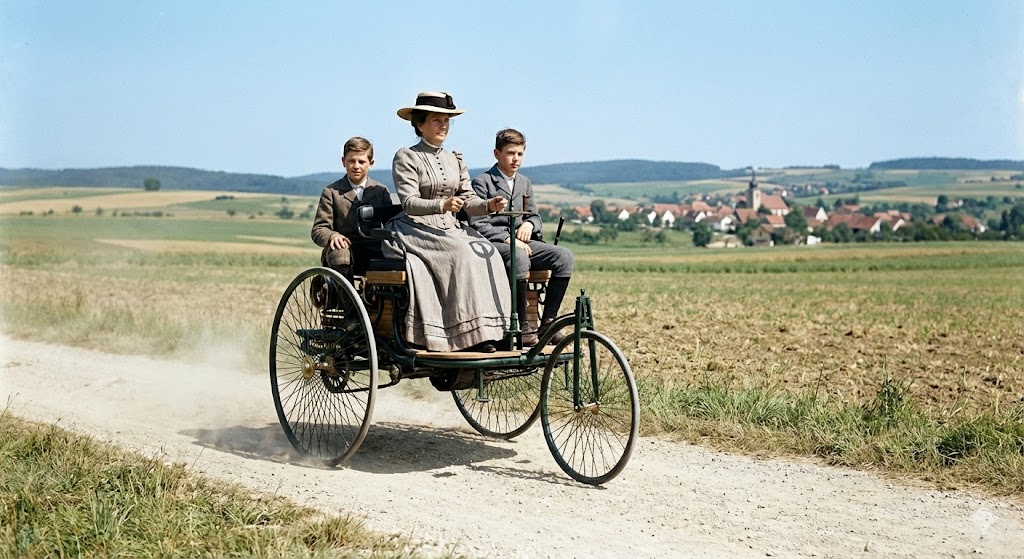
Karl’s wife, Bertha Benz, played a major role in proving the car was practical.
In 1888, she secretly drove the Motorwagen 65 miles from Mannheim to Pforzheim, becoming:
- The first person to complete a long-distance car journey
- The first “automotive influencer” in history
Her journey showed the world that cars were reliable, sparking massive interest in automobiles.
The Legacy Lives On
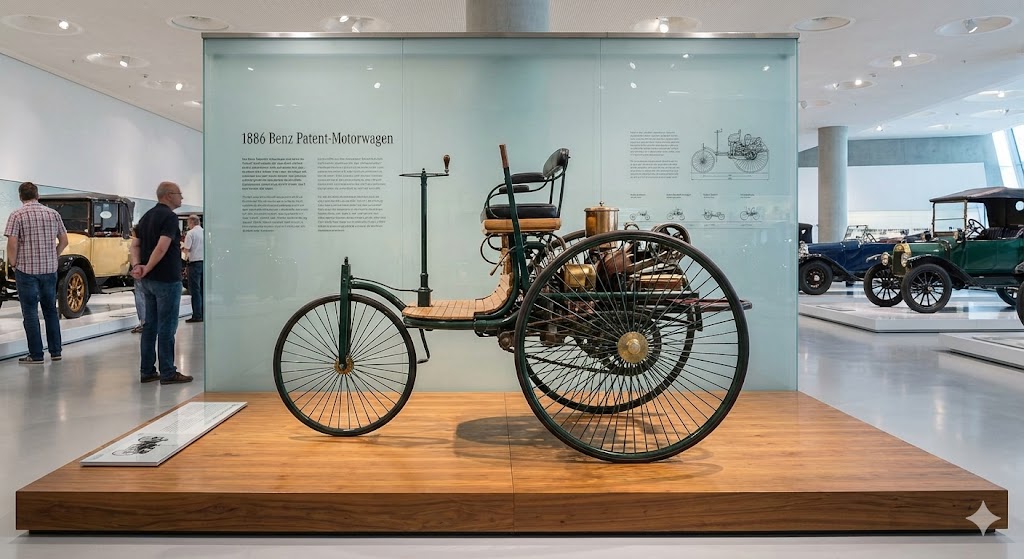
Today, the original 1886 Benz Patent-Motorwagen is carefully preserved and can be seen in museums around the world, such as the Mercedes-Benz Museum in Germany. While our modern vehicles are vastly more complex, they still rely on the fundamental principles introduced by Karl Benz: an internal combustion engine, a transmission, and a steering system. The image below shows the very first car on display, a testament to its enduring legacy.
The Rise of Early Car Companies
After the success of Karl Benz, many companies entered the market:
🇩🇪 Germany
- Benz & Cie
- Daimler Motoren Gesellschaft (DMG)
- Later merged into Mercedes-Benz
🇺🇸 United States
- Ford Motor Company
- Oldsmobile
- Cadillac
🇫🇷 France
- Peugeot
- Renault
By the early 1900s, cars were evolving rapidly.
Henry Ford Changed the World (1908)
In 1908, Henry Ford launched the Model T, the first car made using mass production.
This changed everything:
- Car prices dropped
- Middle-class families could afford cars
- Automobile ownership exploded
Ford didn’t invent the car, he made it affordable for everyone.
How Cars Evolved After the First Automobile
Major developments in the modern era:
- 1910s — Electric starters
- 1920s — Closed-body vehicles & car radios
- 1950s — Power steering & automatic transmission
- 1970s — Fuel injection
- 1990s — Airbags & ABS
- 2000s — Hybrid technology (Prius)
- 2010s — Electric revolution (Tesla)
- 2020s — Autonomous driving
The invention of the first car set everything in motion.